
Intro
Clinicians increasingly field questions about chemicals in the food supply from pesticide residues to “forever chemicals,” heavy metals, and newly visible microplastics. Across U.S. surveillance programs, most foods test within federal limits, yet certain contaminants contribute to avoidable risk for vulnerable patients and communities, and regulatory standards continue to evolve [1], [2], [4], [5]. This guide synthesizes current evidence and U.S. policies to help you counsel patients on practical risk reduction, including when organic choices may offer value.
Environmental Toxicology: What Clinicians Need to Know
Environmental toxicology examines how environmental agents interact with living systems to cause adverse health effects. In a clinical frame, we care about exposure sources (diet, water, air, consumer products), pharmacokinetics (absorption, distribution, metabolism, elimination), life-stage susceptibility (fetal, early childhood, pregnancy), and the strength of causal evidence. U.S. biomonitoring through the CDC’s National Report characterizes population-level exposures to pesticides, metals, PFAS, and other chemicals and is updated periodically to incorporate new analytes (e.g., urinary glyphosate in 2017–2018) [3], [27]. For water contaminants, FDA/USDA food monitoring and EPA drinking-water rules set limits that are feasible for industry and protective for most consumers, with important exceptions for high-exposure communities [1], [2], [4], [11].
How Chemicals Reach the American Plate
Pesticides (including organophosphates and glyphosate)
Most U.S. produce samples are below EPA tolerances in the USDA Pesticide Data Program (PDP) and FDA residue monitoring, yet “below tolerance” is not synonymous with “no risk,” particularly in pregnancy and early childhood where neurodevelopment is sensitive to low-level exposures [1], [2], [33]. Cohort and review data link prenatal organophosphate exposure to adverse neurobehavioral outcomes, including attention and cognitive impacts, though exposure metrics and susceptibility vary across studies [33], [34], [35].
Glyphosate remains a flashpoint. IARC classified glyphosate as “probably carcinogenic to humans” (Group 2A) in 2015 (hazard identification) [28], while EPA’s risk assessment (most recently affirmed when EPA withdrew and agreed to revisit explanatory documents in 2022) concludes glyphosate is “not likely to be carcinogenic to humans” at typical dietary exposures (risk assessment) [29], [30]. Clinically, this divergence underscores counseling nuance: absolute risks for the general population appear low per EPA; occupational users (e.g., applicators) warrant more stringent precautions [29], [30].
Practical produce mitigation is effective for surface residues: thorough rinsing under running water and brushing can reduce residues; a 2017 experiment demonstrated sodium bicarbonate (baking soda) washes outperform plain water for certain pesticides on apple skins, while peeling removes more but at the cost of fiber and micronutrients [25], [26], [39]. Internalized residues are less affected by washing [25].
PFAS (“forever chemicals”)
In April 2024, EPA finalized the first enforceable national PFAS drinking-water standards: MCLs of 4 parts per trillion (ppt) for PFOA and PFOS; 10 ppt for PFNA, PFHxS, and HFPO‑DA (GenX); and a hazard‑index approach for mixtures including PFBS. Water systems generally have five years to comply, with interim monitoring and communication requirements [4]. In 2025, EPA proposed changes that would roll back parts of the rule and extend timelines; details and litigation are evolving, so local applicability may change by jurisdiction [5]. For patients, ingestion via water and certain foods is a primary exposure route; household treatment options include granular activated carbon (GAC), reverse osmosis (RO), and some ion-exchange systems [4].
Dietary PFAS can be relevant in some regions: analyses of EPA data show median PFAS levels in locally caught freshwater fish far exceed levels in commercially sold fish, with PFOS the largest contributor; a single freshwater fish meal can meaningfully increase PFOS body burden [19], [20]. Counseling anglers to heed local advisories, trim fat, and favor lower‑contaminant waters/species remains prudent [19], [20].
Heavy metals (lead, mercury, arsenic, cadmium)
Lead: There is no known safe exposure level for children; CDC’s blood lead reference value is 3.5 µg/dL (used to flag children with higher-than-population exposures) [6]. In January 2025, FDA finalized action levels to reduce lead in certain processed baby foods, particularly fruit/vegetable products and cereals, complementing earlier Closer to Zero actions [7].
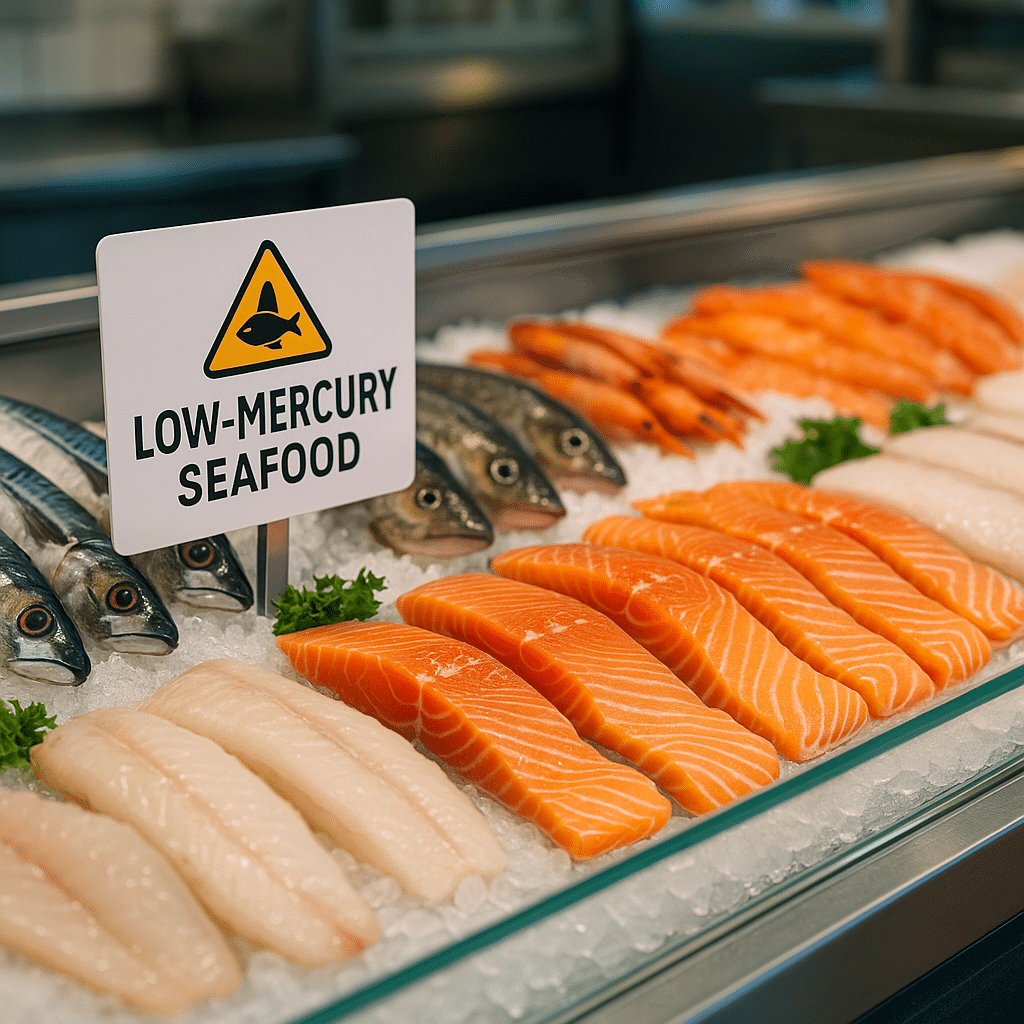
Mercury: Methylmercury exposure is dominated by certain fish. FDA/EPA’s 2024 advice recommends “Best Choices” low‑mercury fish for pregnancy, breastfeeding, and early childhood (e.g., salmon, shrimp) and avoiding high‑mercury species (e.g., shark, swordfish) [8].
Arsenic: Inorganic arsenic in rice products remains a focus for infants. FDA set a 100‑ppb action level for inorganic arsenic in infant rice cereal [36]. In private wells (not federally regulated), about 7% may exceed the 10 µg/L arsenic MCL; clinicians should encourage periodic testing and appropriate filtration (e.g., RO) in affected households [9], [10], [11].
Cadmium: Diet can contribute via cereals, leafy greens, and shellfish; long-term exposure is associated with renal and bone effects. FDA’s Total Diet Study provides context for dietary cadmium along with other elements [24].
Persistent organic pollutants (POPs: dioxins, dioxin‑like PCBs)
Dioxins are persistent, bioaccumulative compounds found mainly in animal fats; more than 90% of human exposure is foodborne (meat, dairy, fish) [31], [32]. Levels have generally declined over decades in many high‑income countries due to industrial controls, but residual dietary exposure persists. For at‑risk patients, counseling can include trimming visible fat, preferring lean cuts, and cooking methods that reduce fat drippings [31], [32], [24].
Microplastics and nanoplastics
Microplastics are now detected in human blood and various tissues; a 2024 NEJM cohort of patients undergoing carotid endarterectomy found microplastics/nanoplastics in plaques of ~58%, with higher risk of MI, stroke, or death over ~34 months among those with detected particles (association, not proof of causation) [21], [22], [23]. While clinical management remains unchanged, these findings support source control (e.g., minimizing plastic food contact at high temperatures) and policy measures addressing upstream plastic use.
What “Organic” Means in the U.S.
“USDA Organic” is a regulated standard under the National Organic Program (NOP), prohibiting genetic engineering and the vast majority of synthetic pesticides/fertilizers unless explicitly allowed on the National List; routine antibiotics and growth promotants are prohibited in organic livestock production [12], [13]. Oversight was strengthened in 2023 to reduce fraud and tighten supply‑chain controls, including imports [37]. Importantly, “organic” does not mean “pesticide‑free” or “risk‑free,” and acute foodborne risks (e.g., pathogens) are managed via standard food safety practices irrespective of organic status.
What the Evidence Says: Organic vs Conventional Health Impacts
Residues and exposure: Organic diets lower dietary pesticide residue exposure, reflected in monitoring programs and biomonitoring studies; population‑level clinical outcome advantages are harder to establish due to confounding and exposure misclassification [1], [2], [33].
Nutrition: Meta‑analyses suggest small but sometimes statistically significant differences (e.g., higher polyphenols in organic produce, higher omega‑3s in organic milk), but clinical significance for most patients is modest relative to the overarching benefit of eating more fruits, vegetables, and whole foods of any type [14], [15], [16], [38].
Antibiotic resistance: Organic meat/poultry is less likely to harbor multidrug‑resistant bacteria in several analyses, likely reflecting restrictions on routine antibiotic use in organic systems [17], [18]. While proper cooking neutralizes most bacterial risks, reduced environmental AMR pressure is a population‑health co‑benefit.
Bottom line for counseling: For patients who can choose organic without compromising diet quality or security, organic options may reduce pesticide residues, offer modest nutrient differences in some categories, and support lower antimicrobial resistance pressures. For all patients, especially those on tight budgets, emphasize overall diet quality, targeted risk reduction (see below), and food safety.

Prioritizing Choices When Budgets Are Finite
Below is a clinician‑friendly quick reference for patients prioritizing limited resources toward the greatest risk reduction.
Table 1. Everyday dietary decisions for lower chemical exposures (fast reference)
• For pregnancy/early childhood: favor low‑mercury fish from FDA/EPA “Best Choices”; avoid high‑mercury species; consider local fish advisories for PFAS and legacy pollutants [8], [19], [20].
• Produce: wash under running water and brush; baking soda wash can reduce certain surface residues; peel selectively if risk–benefit favors removal (e.g., for toddlers), recognizing nutrient loss [25], [26], [39].
• Rice for infants: diversify grains (oat, barley, multigrain) to limit inorganic arsenic; select products meeting FDA guidance for infant rice cereal [36].
• Animal fats: trim visible fat; consider leaner cuts and cooking methods that reduce fat drippings to modestly lower fat‑associated POPs [31], [32].
• Organic “priority” picks when feasible: frequently consumed fruits/vegetables for young children and pregnancy, and animal products where AMR concerns are salient [1], [17], [18].
• Water: verify local utility PFAS reports; for private wells, test regularly and consider RO or GAC where contaminants are detected [4], [9], [10], [11].
Clinic-Ready Algorithms: Exposure History, Testing, and Counseling
Exposure history
• Diet: frequency of locally caught freshwater fish; high‑mercury seafood; infant foods (purees, cereals); reliance on rice-based products.
• Water: public vs private wells; prior PFAS or arsenic exceedances; filtration use.
• Occupation/household: pesticide application, farm work, home gardening with herbicides/pesticides.
• Life stage: pregnancy, lactation, infants/children.
Testing (when to consider)
• Lead: follow pediatric screening policies; confirmatory venous testing if capillary screen elevated [6].
• PFAS: per ATSDR guidance, PFAS blood testing is not a screening test for disease and should be individualized based on exposure history, water testing, and patient goals; results guide exposure‑reduction conversations, not treatment [40].
• Private wells: annual nitrates and periodic arsenic/metals/organics testing per CDC guidance; encourage remediation/filtration where warranted [10], [11].
• Arsenic in infants: emphasize product choices per FDA guidance; clinical testing guided by exposure concerns (e.g., high‑arsenic well water) [36], [10].
Counseling scripts (examples)
• “For your toddler, rinsing and brushing fruits and vegetables, varying grains beyond rice, and choosing low‑mercury fish will reduce exposures while preserving nutrition.” [8], [25], [26], [36]
• “Given your private well, I recommend testing for arsenic and nitrates this year and considering a point‑of‑use RO filter if arsenic is above 10 µg/L.” [9], [10], [11]
• “Because you fish locally from rivers with PFAS advisories, limit meals of freshwater fish and check local guidance; commercial ocean fish in the ‘Best Choices’ list are safer options.” [19], [20], [8]
Selected U.S. Benchmarks and Practical Tables (2024–2025)
Table 2. EPA PFAS Drinking Water Standards (Finalized April 2024; subject to change)
• PFOA: MCL 4 ppt (MCLG 0); PFOS: MCL 4 ppt (MCLG 0); PFNA, PFHxS, HFPO‑DA (GenX): MCL 10 ppt (MCLGs 10 ppt); Hazard Index for mixtures (PFHxS, PFNA, HFPO‑DA, PFBS) = 1.0; typical compliance window up to 5 years [4].
• 2025 update: EPA proposed rolling back parts of the rule and extending timelines; clinicians should verify current state and local implementations when advising patients [5].
Table 3. Infant and Child-Focused Heavy Metal Guidance
• Lead in processed baby foods: FDA action levels finalized Jan 2025 to reduce exposure (product‑specific ppb ranges) [7].
• Inorganic arsenic in infant rice cereal: 100 ppb action level [36].
• Blood lead: CDC reference value 3.5 µg/dL; manage per local protocols [6].
Communicating Uncertainty Without Alarm
Be transparent about what is known (e.g., consistent epidemiology for OP neurodevelopment; PFAS health associations; well‑established mercury neurotoxicity) and unknown (e.g., clinical significance of low‑dose microplastics for individual patients). Emphasize achievable steps that do not compromise diet quality or affordability. When patients ask, “Is organic necessary?”, align advice with their values and resources: organic may reduce residues and support AMR stewardship, but the biggest health gains come from eating a varied, plant‑forward diet, safe food handling, and targeted risk reduction [1], [14], [17].
Key Takeaways
• Monitor evolving PFAS regulations; local implementation affects water counseling [4], [5].
• For pregnancy/early childhood, prioritize low‑mercury fish, diverse grains, and well water testing where applicable [8], [36], [10].
• Organic choices can lower pesticide residues and may support AMR stewardship; ensure messages never deter overall fruit/vegetable intake [1], [17].
• Use simple prep steps (rinse/brush, baking‑soda soaks for some produce, selective peeling) to reduce surface residues [25], [26].
• PFAS blood tests are not diagnostic; use shared decision-making to discuss benefits and limits [40].
References
Regulatory and Surveillance
[1] “USDA Publishes 2023 Pesticide Data Program (PDP) Summary,” USDA Agricultural Marketing Service, Oct 16, 2024.
[2] “FDA Pesticide Residue Monitoring Program, FY 2022,” U.S. Food and Drug Administration, 2024 [PDF].
[3] “What’s New in the National Report on Human Exposure to Environmental Chemicals,” CDC, Mar 28, 2024.
[4] “Final PFAS National Primary Drinking Water Regulation: Technical Overview,” U.S. EPA, Apr 2024 [PDF].
[5] “Trump’s EPA moves to roll back US drinking water limits on ‘forever chemicals’,” Reuters, May 15, 2025.
[6] “Blood Lead Reference Value,” CDC, updated 2024.
[7] “FDA issues final guidance for lead action levels in baby food,” Center for Science in the Public Interest, Jan 6, 2025.
[8] “Advice About Eating Fish,” FDA/EPA, 2024.
[9] “Arsenic and Drinking Water,” U.S. Geological Survey, Mar 1, 2019.
[10] “Guidelines for Testing Well Water,” CDC, Jul 1, 2024.
[11] “Private Drinking Water Wells,” U.S. EPA, accessed 2025.
USDA Organic Standards & Oversight
[12] “7 CFR Part 205 — National Organic Program,” eCFR, current to 2025.
[13] “Organic Regulations,” USDA AMS, accessed 2025.
[37] “New USDA rule boosts ‘organic’ food oversight, targets fraud,” AP News, Jan 2023.
Organic vs Conventional: Nutrition, Residues, and AMR
[14] Baranski M. et al., “Higher antioxidant and lower cadmium concentrations … in organically grown crops,” British Journal of Nutrition (2014).
[15] Średnicka‑Tober D. et al., “Composition differences between organic and conventional milk,” British Journal of Nutrition (2016).
[16] Smith‑Spangler C. et al., “Are Organic Foods Safer or Healthier?” Annals of Internal Medicine (2012).
[17] “Organic meat less likely to be contaminated with multidrug‑resistant bacteria,” Johns Hopkins, May 12, 2021.
[18] Ager E.O. et al., “Global trends in antimicrobial resistance on organic and conventional farms,” Scientific Reports (2023).
[38] Science Media Centre, “Expert reaction to study comparing nutritional quality…,” 2014.
PFAS, Fish, and Water
[19] Barbo N. et al., “Locally caught freshwater fish across the United States…,” Environmental Research (2023).
[20] EPA, “Locally Caught Freshwater Fish PFAS findings,” 2023 [PDF].
Microplastics and Emerging Contaminants
[21] Marfella R. et al., “Microplastics and Nanoplastics in Atheromas and Cardiovascular Events,” NEJM (2024).
[22] PubMed record for NEJM microplastics study (2024).
[23] Leslie H.A. et al., “Discovery and quantification of plastic particle pollution in human blood,” Environment International (2022).
Produce Handling, FDA Total Diet Study, and Biomonitoring
[24] “FDA Total Diet Study: Results (FY 2018–2020 elements),” FDA, Dec 20, 2023.
[25] Yang T. et al., “Effectiveness of Commercial and Homemade Washing Agents in Removing Pesticide Residues on and in Apples,” JAFC (2017).
[26] Ömeroğlu P.Y. et al., “The Effect of Household Food Processing on Pesticide Residues,” Foods (2022).
[27] “About the Biomonitoring Data Tables,” CDC, updated May 29, 2025.
[39] Krol W.J. et al., “Reduction of Pesticide Residues on Produce by Rinsing,” JAFC (2000).
Pesticide Health Evidence and Glyphosate
[28] IARC, “Glyphosate Monograph (Group 2A),” 2015.
[29] EPA, “Glyphosate,” updated 2024.
[30] EPA, “EPA Withdraws Glyphosate Interim Decision,” Sep 23, 2022.
[33] Sagiv S.K. et al., “Prenatal and Childhood Exposure to Organophosphate Pesticides…,” Environmental Health Perspectives (2023).
[34] Furlong M. et al., “Organophosphate pesticide exposures and neurodevelopment,” PNAS (2019).
[35] Sagiv S.K. et al., “Gestational DAP metabolites and ADHD risk,” Environmental Research (2021).
POPs/Dioxins and Infant Arsenic Guidance
[31] WHO, “Dioxins and their effects on human health,” Nov 29, 2023.
[32] FDA, “Dioxins & PCBs,” Feb 25, 2022.
[36] FDA, “Guidance for Industry: Action Level for Inorganic Arsenic in Infant Rice Cereals,” 2023.
PFAS Clinical Counseling
[40] ATSDR/CDC, “PFAS Information for Clinicians – 2024,” Nov 12, 2024.