
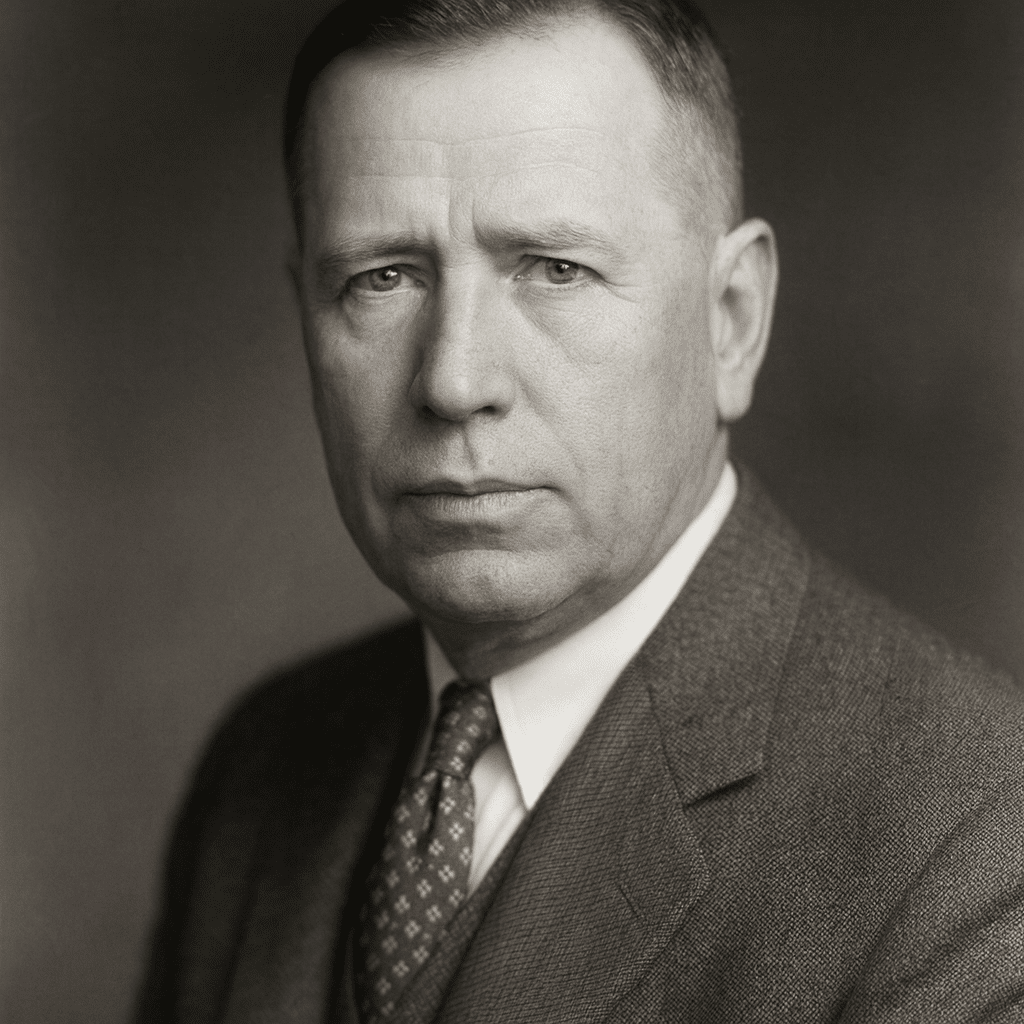
Dr. Royal Lee reshaped early conversations about nutrition, dentistry, and food processing in the United States. He founded Standard Process in 1929 to produce whole‑food concentrates and spent decades inventing tools and methods to better preserve nutrients from soil to supplement. His work sparked both innovation and controversy in clinical nutrition and regulation [1][2].
Early Life and Education
Lee was born in Wisconsin in 1895. Company accounts emphasize his early interest in mechanics and science and note claims that he taught an advanced physics class while still in high school (a claim reported by the company and not independently verified). He enrolled at Marquette University’s School of Dentistry and graduated in 1924 [1].
During and after dental school, Lee tinkered with dental motors and controls. By the mid‑1920s he was filing patents related to speed control in small motors. In 1927 the U.S. Patent Office granted him a patent for a speed governor designed to hold motor speed steady under changing load—technology directly relevant to dental handpieces of the era [11].
From Dentistry to Nutrition
Lee argued that refined flour and sugar contributed to dental decay and that overall diet shaped oral health. These views fit a broader movement of the 1910s–1930s that linked vitamins and “protective foods” to health. Company histories portray Lee as an early advocate of minimally processed foods and whole‑food concentrates. Some of his clinical claims went beyond mainstream consensus and later drew scrutiny from regulators and medical groups [1].
Founding Standard Process (1929)
In 1929, Lee founded Standard Process to make nutrient‑dense, whole‑food concentrates. The company’s first product, Catalyn, launched the same year and remains a flagship formula. Standard Process describes Catalyn as a multi‑ingredient supplement developed to help fill nutrient gaps in modern diets, with plant components sourced from the company’s Wisconsin farm [1][2].
To protect heat‑sensitive constituents during manufacturing, Lee promoted low‑temperature, high‑vacuum drying and gentle milling. Company literature attributes these methods and related equipment to Lee’s engineering focus and positions careful processing as central to the whole‑food philosophy [3].
Standard Process adopted a professional‑channel model, distributing products primarily through licensed health‑care practitioners—an approach the company continues today [8].
Inventions and Technical Work
Speed Governor and Dental Equipment
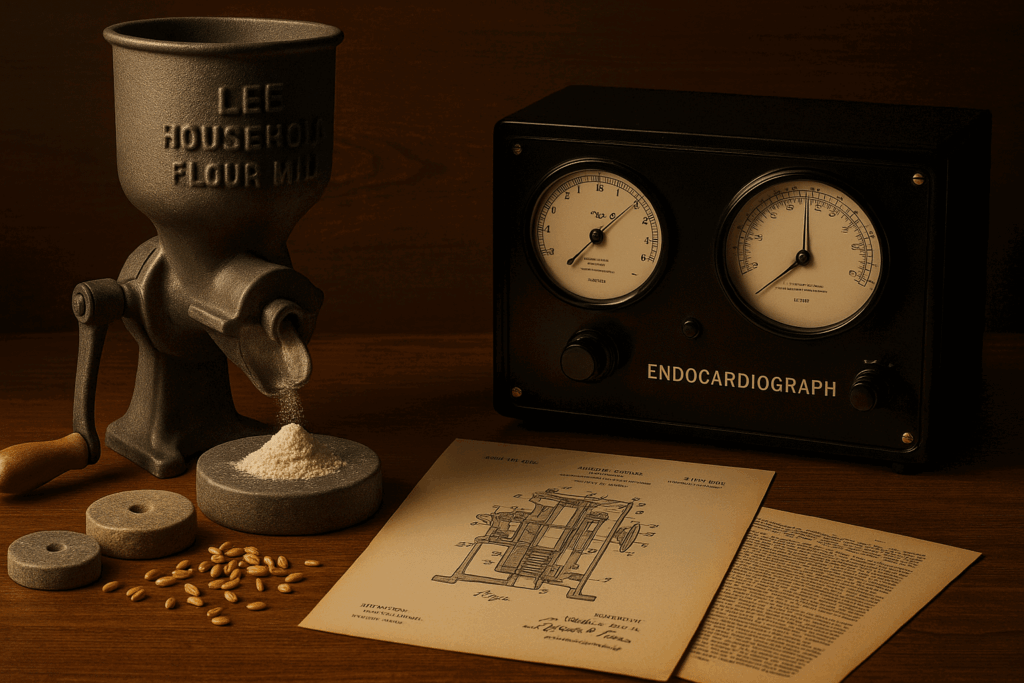
Lee’s U.S. Patent 1,630,394 (granted in 1927) covers a speed governor for electric motors that stabilizes rotational speed under load. This well‑documented patent supports his engineering credentials and connects his mechanical work to dental equipment needs of the period [11].
The Lee Household Flour Mill
In 1949, Lee introduced the Lee Household Flour Mill, a home grain mill aimed at restoring access to fresh, whole‑grain flour. Company histories and later product materials describe the mill design as projecting grain against a stationary milling surface to produce fine, whole‑grain flour. The objective was to avoid nutrient losses associated with commercial refining and storage [1][12].
Evidence strength: strong for the mill’s existence and year of introduction (company timeline); strong‑to‑moderate for specific design claims (supported by manufacturer and technical descriptions rather than independent lab studies). Modern reviews of home milling discuss heat and fineness trade‑offs; these nuance but do not negate the historical aim to preserve freshness and complexity [12].
Laboratory and Processing Tools
Company and affiliated literature credit Lee with developing analytical and processing instruments to support whole‑food concentrates, including low‑temperature vacuum dryers and custom mills. These attributions are consistent across company sources; independent technical documentation is limited, so they should be treated as company‑sourced history rather than peer‑reviewed validation [3].
Endocardiograph / Acoustic CardioGraph (ACG)
In 1937, Lee established the Endocardiograph Company and offered a portable device that graphed heart sounds. Company timelines present it as a tool to visualize cardiac acoustics and, in some accounts, to help infer nutritional status. That latter claim has been controversial. Critical assessments argue that using heart‑sound patterns to map “nutritional status” lacks validation and should not replace medical diagnostics. Modern acoustic cardiography, distinct from Lee’s device, has been studied for limited supportive roles in evaluating cardiac function but is not a standalone diagnostic. Historically, it is most accurate to state that Lee’s device recorded heart sounds, while its use for nutrition inference remains outside mainstream cardiology [1][13][14][15].
Conflicts with the FDA and Professional Establishment
From the late 1930s onward, federal regulators challenged claims connected to Catalyn and related products. Court records from the Seventh Circuit summarized the government’s position that Catalyn labeling and literature asserted composition and disease benefits not supported by accepted evidence; a jury returned a guilty verdict in a 1939 case. FDA archives also document a misbranding action against Catalyn in August 1940 [5][6].
In 1945, the Federal Trade Commission issued an order directed at “Royal Lee, trading as Vitamin Products Co.” that restricted representing Catalyn and other vitamin complexes as competent treatments for a wide range of diseases and prohibited disparagement of synthetic vitamins as a category. The order shows how advertising claims for nutrition products were interpreted under federal law at the time [4].
Company timelines note a 1962 consent decree with FDA. Supporters saw regulatory actions as suppression of whole‑food ideas; regulators and many physicians framed them as necessary safeguards against disease claims in supplement marketing. A balanced reading centers the primary documents and court records and recognizes both perspectives [1][4].
The Standard Process Farm in Wisconsin
Standard Process operates an organic regenerative farm near its headquarters and manufacturing facility in Palmyra, Wisconsin. The Wisconsin Department of Natural Resources’ Green Tier program lists the company as a Tier 1 participant and describes a 623‑acre certified‑organic farm. Company materials report later expansion, with recent sources citing 868 acres. The safest approach is to anchor acreage to the date of the cited source, since reported figures vary over time [7][1][8].
The farm highlights organic and regenerative practices, including multi‑year crop rotation, cover crops, composting, habitat for pollinators, and short transit from field to processing. Company pages document these practices and provide seasonal crop plans. These align with common regenerative methods such as regular soil testing, rotations, and biodiversity management [9][18].

Honors, Affiliations, and Influence
Lee founded the Lee Foundation for Nutritional Research in 1941 to publish and disseminate nutrition literature [1]. Some biographies assert he was named a Fellow of the American Association for the Advancement of Science (often “1942”). A primary AAAS record has not been located here; treat this as unverified unless confirmed by AAAS publications or archival lists.
Lee’s broader influence lies in the way he linked engineering, nutrition, and agriculture. He emphasized whole‑food matrices, gentle processing, and farm stewardship—ideas now common in many food‑first and integrative‑nutrition circles, even as his disease‑claim positions were rejected by regulators.
Legacy and Modern Reassessment
With hindsight, several of Lee’s instincts look prescient: refined carbohydrates and stripped grains can harm dental and general health; fresh, minimally processed foods matter; and farming practices shape ingredient quality. Where he overreached—particularly around using the Endocardiograph to infer nutritional status or implying disease treatment from supplements—regulators intervened, and mainstream medicine did not adopt those views. Today, Standard Process positions itself as a whole‑food supplement maker with a vertically integrated organic farm and a practitioner‑only channel—an approach that reflects Lee’s central vision of quality control from soil to supplement [2][4][9].
Timeline: Key Milestones (1895–1967)
• 1895 — Royal Lee born in Wisconsin [1]
• 1924 — Graduates from Marquette University School of Dentistry [1]
• 1927 — U.S. Patent 1,630,394 granted for electric motor speed governor [11]
• 1929 — Founds Standard Process; launches Catalyn [1][2]
• 1937 — Endocardiograph Company established; heart‑sound graphing device introduced [1]
• 1939–1940 — Federal misbranding actions regarding Catalyn; guilty verdict (Seventh Circuit case summary) and FDA case records [5][6]
• 1941 — Lee Foundation for Nutritional Research established [1]
• 1945 — FTC order restricting disease and disparagement claims [4]
• 1949 — Lee Household Flour Mill introduced [1][12]
• 1962 — Company timeline notes consent decree with FDA [1]
• 1967 — Lee dies at age 72 [1]
• 2010s–2020s — Wisconsin DNR lists 623‑acre organic farm; company cites expansion to 868 acres (use date‑specific figures) [7][1]
Key Inventions and Tools (Evidence Summary)
• Motor Speed Governor (U.S. Patent 1,630,394, 1927) — Stabilizes small electric motor speed under load; strong evidence via patent [11]
• Endocardiograph (1937) — Records heart sounds; existence/date strong; clinical utility for “nutritional status” disputed [1][13][14][15]
• Lee Household Flour Mill (1949) — Home milling of whole grains; strong for existence/date; technical preservation claims moderate [1][12]
• Low‑temperature, high‑vacuum drying (1930s–1950s) — Intended to protect heat‑sensitive constituents; moderate evidence (company documentation) [3]
FAQs
What is Catalyn?
Catalyn is a multi‑ingredient supplement introduced by Standard Process in 1929 as a whole‑food concentrate. It remains in the product line today [2].
What is the Endocardiograph (Acoustic CardioGraph)?
It is a portable device that records heart sounds. Company histories trace it to 1937. Claims that it maps “nutritional status” are controversial and not part of mainstream cardiology; modern acoustic cardiography has limited supportive roles only [1][14][15].
Did Dr. Lee clash with federal regulators?
Yes. In the late 1930s and 1940s, federal actions challenged composition and disease claims connected to Catalyn and related products. The FTC issued an order in 1945, and company timelines note a 1962 consent decree with FDA [4][1].
Where is the Standard Process farm and how big is it?
In Palmyra, Wisconsin. The Wisconsin DNR lists a 623‑acre certified‑organic farm; company materials later cite 868 acres. Anchor any number to the source date because the acreage has expanded over time [7][1].
What farming practices does Standard Process highlight?
Organic and regenerative practices including crop rotation, cover crops, composting, and pollinator habitat; short distance from field to processing [9][18].
Did Lee receive an AAAS Fellowship?
Some biographies claim this for 1942, but a primary AAAS record was not located here; treat as unverified unless confirmed by AAAS archives [1].
References
- Standard Process. A History of Changing Lives (Company Timeline), 2023. https://my.standardprocess.com/StandardProcess/media/Literature/LN02450-2023-Timeline.pdf
- Standard Process. Catalyn Product Page. https://www.standardprocess.com/products/catalyn
- Standard Process. The Story of Dr. Royal Lee (company literature). https://my.standardprocess.com/Products/Literature/The-Story-of-Dr-Royal-Lee
- Federal Trade Commission. Annual Report, 1945 (Order re: “Royal Lee, trading as Vitamin Products Co.”). https://www.ftc.gov/sites/default/files/documents/reports_annual/annual-report-1945/ar1945_0.pdf
- United States v. Lee, 107 F.2d 522 (7th Cir. 1939). https://law.justia.com/cases/federal/appellate-courts/F2/107/522/1495248/
- FDA/National Library of Medicine (FDCA archive). Misbranding of Catalyn, August 1940. https://fdanj.nlm.nih.gov/
- Wisconsin Department of Natural Resources. Standard Process, Inc. — Green Tier Participant. https://dnr.wisconsin.gov/topic/GreenTier/Participants/StandardProcess.html
- Standard Process. Frequently Asked Questions (distribution and general info). https://www.standardprocess.com/faqs
- Standard Process. Organic Farming Methods. https://www.standardprocess.com/about-us/quality/organic-farming-methods
- Standard Process. Farm/Soil and Crop Practices (seasonal plans and methods). https://www.standardprocess.com/about-us/our-farm
- U.S. Patent No. 1,630,394. Speed Governor for Electric Motors (Royal Lee), granted May 31, 1927. https://patents.google.com/patent/US1630394A
- Organics by Lee. The History and Importance of Stone Milling. https://www.organicsbylee.com/the-history-and-importance-of-stone-milling/
- Center for Inquiry. History of the Acoustic CardioGraph (overview and critique). https://centerforinquiry.s3.amazonaws.com/wp-content/uploads/sites/33/2022/02/17205117/history-of-the-cardiograph.pdf
- Quackwatch. A Critical Look at the Acoustic CardioGraph. https://quackwatch.org/device/reports/acg/
- Zhang FW, et al. Value of acoustic cardiography in the clinical diagnosis of asymptomatic LV systolic dysfunction. Journal of Clinical Laboratory Analysis. 2021. https://pmc.ncbi.nlm.nih.gov/articles/PMC8495079/
- Standard Process Blog. Supporting Pollinators on Our Organic Farm. https://www.standardprocess.com/blog/supporting-pollinators-on-our-organic-farm